Showing posts with label News and Updates. Show all posts

Sunday, February 19, 2012

IIUI, Rector and Recent Scandals: The Other Side of the Picture

In response to our last post, we received several comments sharing certain concerns about different aspects of the situation prevailing right now in IIUI. As we maintain principle of neutrality and fairness so it is important show other side of the picture as will. Please see following three comments:

----------------------

1. Reading the Charge Sheet against Professor Fateh Malik, one is struck by the crude language of the “Daughters and Sisters” of Ummah and it is sad to see the letter appearing on your blog. It seems that some vested interests are operating behind this letter against the rector in the wake of recent scandals in IIUI. What is most horrible in the charge sheet is the nature of charges which require the proper proof under Islamic Law. In case they cannot come up with such proof, they should be ready for the punishment of “buhtan” in Islamic Law. All those associated with IIUI should avoid washing their dirty linen in the public.

2. I think this type of secret letters are hallmark of jamiat groups in IIUI ,they are filthy and full of defamatory items agaiinst peolple whom they want to remove. Allah is forgotten by these people in such letters and they think they are reformers of the world appointed by God.I only seek protection of allah frm such groups who write such letters. we have very few senior academics left in pakistan, and Dr Malik has always shown respect to females. if females themselves are dying for such scandals then allah is the best judge inshallah. mdm kaisera was my teacher in F.7/2 college and she never needed such cheap tactics as mentioned in that letter. she is too busy for these things. this letter people shd come infront with their names if they are so obliged to write such false accusations, if tehy are true wht are they afraid of ? why hiding? allah will be on their side....right???

3. Hello, Is there a link to this blog post or is it just a hidden accusation? Please make it public if this is true because this is serious or the routine IIUI conspiracy tactic?

Thursday, February 16, 2012

CHARGESHEET AGAINST PROF. FATEH MUHAMMAD MALIK, RECTOR, (A DIRTY OLD MAN) INTERNATIONAL ISLAMIC UNIVERSITY ISLAMABAD(IIUI)


Note: We received this message from different sources and were really reluctant to share on our blog. However, it is impossible to ignore such allegations after publication of recent news items about heinous scandals in the IIUI.
------------------------------------

Whatever, we heard and read about sex scandals at IIU, it is unfortunately a truth … more unfortunate segment is this that this is yet an incomplete truth …. As when elder/guardian of a home has indulged in immoral activities, then what to speak of sons and daughters???????

Rector , Mr. Fateh Muhammad Malik ( a simple MA urdu of 75 year old) , has immoral relations with students and female staff/teacher of this very unfortunate university ,which was established in the name of universal religion.. Islam. .. Rector is corrupted to the limit that he has crossed every moral limitations……but alas,, who listens …. No one perhaps … who cares … no one infact…. BUT ALLAH LISTENS TO VOICE OF AGGRIEVED, ALLAH CURES SUCH EVILS ALSO ,,, AND ALLAH WILL CURE SOON RECTOR IIUI…… MAY BE IN FORM OF A PERMNANAT PARASITIC DCESEASE ……

WE , THE WRITTERS OF THIS LETTER/MAIL ARE FEMALES ,,, WE SWEAR BY THE SACRDED BEING OF ALLAH (S.W.T) THAT WHAT EVER WE WILL WRITE , WE WILL WRITE UPTO OUR BEST OF KNOWLEDGE AND BEING IN THE COURT OF OUR LORD ……….

WE HEREBY PRESENT THE CHARGE SHEET AGAINST A DIRTY OLD MAN , FATEH MUHMMAD MALIK,RECTOR ,IIUI WITH THE BRIGHT HOPE THAT …… RECTOR’S WINGS WILL BE TRIMMED UP….

1. Rector has immoral relations with Dr.Sadia Tahir , Assistant Prof, Uudu Department, Ex-provist IIUI, who is ironically named/called as Dr. Saida MALIK in our campus …(we have evidence of some voice recording ,we can provide )
2. Sadia Tahir did Ph.D from NUML under the sweet shadow of support of her beloved Fateh Malik in just 2-3 years without fulfilling HEC criteria. She joined IIU before just 3.5 year back when she was having merely an MA degree ……
3. the same lady , was proved to be involved in supplying IIUI hostelised female students to corrupt people outside and to some of officers inside the IIUI .this she was doing with support of another morally and financially corrupt lady , Prof. Qaisra Alvi (ex –Director Female Campus), Ex- Chairman Urdu Department ………
4. Why prof WAsira Alvi was not given extension …… it should be investigated ,,,,,, but the main reason was that Sadia Tahir is more pretty and open to Rector than Prof. Qasira ,,, in the conflict of the two open givers women ,,, Rector has been wise quite enough to choose a choosy one a pretty one ..sadia tahir ….
5. Rector is a supreme commander of hypocracy and of immoral and financial corruption …. He is leading IIUI towards calamity, communism and absurdity due to his personal tilts to such aspects….
6. Females who are frank and friendly with Rector , are enjoying very privileged positions and benefits.
7. During his entire tenure ,, we have been observing unrest, war like situations, sex scandals, .. why?
8. The girl caught while doing intercourse with Dr. Jabar (AP economics) was later offered to this drity and filthy man , Fateh Malik and this dirty man badly utilized this girl … the matter must be interrogated …. That is why, Dr. Jabar was given safe passage ad respectable way to exit on deputation …..
9. What was done by filth man . chief librarian with series of girls was known to Rector IIUI …. But he always gets happy to catch such caught girls and utilized them for his lust …… Why Rector allowed the culprit Rafiq to go on leave even after doing dozen of intercourses with plenty of girls ?????
10. Rector wants to make IIU a brothel ……which he can not make I.A…. we are digging his grave ……


THESE ARE 10 POINTS FOR MR.10 NO OF THIS CENTURY ,,,,PROF .FATEH MALIK….
IF WE ARE CONTACTED BY RETURN MAIL AND IF WE FEEL THAT THE OTHER PARTY IS CONVINCED AND TRUHFUL WE WILL SURELY PROVIDE EVIDENCES TO ALL SUCH CASES …….

LETS CLEANSE THE WASTE,,, LETS PURFIY THE ISLAMI UNI OF PAK …
LETS THROW OUT THE DIRTY OLD MAN …

THE DIRTY MAN’S TERM OF RECTOR IS ALSOMOT ENDING …THEREFORE ..
AT THE END, WE WANT TO APPEAL , CHANCELLOR IIUI(PRESIDENT OF PAKISTAN) , CHIEF JUSTIC OF PAKISTAN , SPEAKER N.A AND CHAIRMAN HEC TO AVAIL THIS OPPORTUNITY BY WIPING OUT THIS FILTH AND GARBAGE FROM SCENE OF IIUI by NOT GIVING RECTOR FORMAL EXTENSION AND BY WITHDRAWING TEMPORARY ORDER/NOTIFCIATION ISSUED ON 15TH FEB,2012 IN WHICH HE WAS ASKED TO CONINUE WORKING “TILL FURTHER ORDERS” …….


Daughters and Sisters of Umat-e-Muslimah

Tuesday, August 31, 2010

IIUI Top Guns Lock Horns Over Faculty Hiring, Firing


Dawn.com

By Khawar Ghumman
Monday, 30 Aug, 2010

ISLAMABAD, Aug 29: Top officials of International Islamic University Islamabad (IIUI) have locked horns over hiring and firing of the faculty.

According to sources, Rector Prof Fateh Mohammad Malik last week barred IIUI President Dr Anwar Hussain Siddiqui from issuing any termination letter without the approval of university’s chairman of the board of governors (BoG). Dr Malik is also chairman of the BoG.

The sources said Dr Malik while expressing serious reservations over frequent terminations of the faculty members, which according to him had brought a bad name to the university, asked the president to take the BoG on board in all hiring and firing cases.

It is worth mentioning here that the Supreme Court a couple of months ago had taken suo motu notice of irregular appointments in the International Islamic University.

When contacted, Vice-President International Islamic University (administration & finance) Parveen Qadir Agha contended that the apex court had accepted university’s explanation; hence, the case stood disposed of.

In a written response to queries of this correspondent, she added: “The Supreme Court (human rights cell) did not send a written order as per its rules. As such, the above facts can be verified by obtaining the decision from the court.”

According to the Supreme Court officials, the case was still in process. Similarly, the apex court’s official website, which provides online status of cases, showed no response when the case number “HRC 3056-G/2010” was filled in.

Mohammad Yousuf, on whose application the court took the suo motu notice, had questioned the required experience of three professors who were working as deans of the faculties of Management, Basic and Applied Sciences and Engineering and Technology.

According to Ms Agha, university professor Dr Irfan Khan, the head of the environmental sciences department, was behind the suo motu action against the university.

She said: “Dr Khan had been removed from the chairmanship of the department and the university will also take further action again him.”

When contacted, Dr Khan said: “I expressed resentment on appointment of Dr Riaz Ahmad as Professor (software engineering/dean) of the faculty of basic and applied sciences, because first of all his appointment on contract was not transparent.

It was through silent mode while he was working at the Arid Agriculture University, Rawalpindi, until mid-March 2009 and at the same time he was appointed as dean in January, 2009.

For his appointment, there was no advertisement, no selection board and even no one asked about his credentials and qualifications for professorship.” Therefore, Dr Khan alleged, the university administration had gone against me, and was looking for excuses to throw me out of the job.

“Initially, I was asked to resign. Then in July 2010, the administration conveyed me the adverse remarks in my ACR of 2009 written by Dr Riaz”. He said Dr Riaz commented on his performance during the time when he had even not joined the IIUI.

Dr Riaz is one of the three IIUI professors whose experience was under question in the court.

Dr Khan is the founder chairman of the department of environmental science at the IIUI.

He is the incumbent convener of the National Curriculum Revision Committee in Environmental Science and member of the recently constituted National Think Tank of Environmental Law Reformulation of Planning Commission of Pakistan. Dr Khan, diplomat of Imperial College of Science, Technology and Medicine, London, holds a PhD degree from London University in environmental science.

According to sources, the IIUI was being governed like a kingdom. For example, the sources said, an assistant professor had been appointed as director of the Institute of Islamic Economics in the presence of four renowned professors like Prof Asad Zaaman, Prof Syed Mohammad Tahir, Prof Hamza Ishaq Bhatti and Prof Zamurad Pervaiz Janjua.

A top official of the university requesting not to be named said Ms Agha was a former bureaucrat but running the university which was completely a different job.

Sunday, March 28, 2010

Dr Muhammad Umer Chapra to Deliver Lectures at IIUI


First see this news item from: http://www.umt.edu.pk/khuram_Murad/islamabad.html

Lecture Topic: The Islamic Vision of Development

Date and Time: Tuesday, 30th March 2010, 11:00 am – 1:45 pm
Guest Speaker: Dr Muhammad Umer Chapra, Research Advisor, Islamic Research and Training Institute, Islamic Development Bank, Jeddah

Venue: International Islamic University Auditorium Faisal Masjid Campus, Islamabad

Dr Muhammad Umer Chapra

Dr Muhammad Umer Chapra is Research Advisor at the Islamic Research and Training Institute (IRTI) of the Islamic Development Bank (IDB), Jeddah. Prior to this position, he worked as Senior Economic Advisor at the Saudi Arabian Monetary Agency (SAMA), Riyadh, where he served for nearly 35 years. Earlier, he taught at the University of Wisconsin and the University of Kentucky, as Assistant and Associate Professor of Economics respectively, and was associated with the Pakistan Development Review as Senior Economist. Dr Chapra also worked as Associate Editor at the Pakistan Institute of Development Economics, and as Reader (Associate Professor) at the Central Institute of Islamic Research, Pakistan. A prolific writer and an author of 16 books and monographs and more than 100 papers and book reviews, Dr Chapra is acclaimed for his most outstanding origial contribution of four books: Muslim Civilization: The Causes of Decline and the Need for Reform (2008),

The Future of Economics: An Islamic Perspective (2000), Islam and the Economic Challenge (1992), and Towards a Just Monetary System (1985). Given the originality and impact of his contributions, his works have been translated into a number of languages, including Arabic, Bangla, French, Indonesian, Japanese, Malay, Persian, Polish, Spanish, Turkish and Urdu. Dr Chapra has lectured widely at a number of universities and professional academic and research institutions in different countries around the world, including the Harvard Law School, USA; Loughborough University, UK; the Oxford Centre for Islamic Studies, UK; the London School of Economics, UK; Universidad Autonoma, Madrid; the University of Malaga, Spain; the House Commons, London; the Islamic University of Rotterdam, the Netherlands and the Asia Pacific and Kyoto Universities in Tokyo and Kyoto, Japan. He has participated in a number of meetings of international and regional organizations like the IMF, IBRD, OPEC, IDB, OIC, GCC. He has also served for three years (2002-2005) as member of the Technical Committee of the Islamic Financial Services Board (IFSB) established in 2002 to prepare standards for the Islamic financial industry.
Dr Chapra is on the editorial board of a number of professional journals and has acted as referee for a number of others, including the Economic Journal of the Royal Economic Society, UK; the Journal of Socio-Economics, USA; the Journal of Islamic Studies (Oxford), UK; and the Journal of Economic Behavior and Organization, USA.

Dr Chapra is recipient of numeorus awards including the Islamic Development Bank Award for Islamic Economics and the King Faisal International Award for Islamic Studies. He was also awarded the Institute of Overseas Pakistanis (IOP) Gold Medal in August 1995 by the President of Pakistan for service to Islam and Islamic economics at the First IOP Convention in Islamabad.

For Details Contact

Waqar Ahmed 0300-4357040 Sabihuddin Khan 0333-3233846
A G Ghaffari 0300-8402650 Noor Aslam 0305-4440605,
University of Management and Technology, Lahore
C-II, Johar Town, Lahore-54770, Pakistan Tel: 92-42 35212801-10
Fax: 92-42 35212819 Website: www.umt.edu.pk
---------------------

Now see the news item released by IIUI about the same event. There is no mention of who is organizing these lectures and what is the role of University of Management and Technology in this regard. Our media team, if any, is thoroughly unprofessional!

Dr. Umer Chapra to Speak at IIUI

Islamabad. Dr. Umar Chapra, Research Advisor, Islamic Research and Training Institute (IRTI), Islamic Development Bank(IDB), Jeddah shall be delivering two lectures at the International Islamic University, Islamabad (IIUI) on 29th and 30th March 2010 at its Faisal Mosque Campus. His First Lecture shall be on “State of Islamic Economics 2009” and Second lecture shall be on “The Islamic Vision of Development”. Both events are open for all Interested persons.

Syed Muzammil Hussain
Deputy Director,
Public Relations Section
International Islamic University,
Islamabad (IIUI)
Phone No. 051-9019249
Fax No. 051-9257909

Tuesday, March 23, 2010

What a come back! What a come back!

For many at IIUI, it would be a shocking news. But equally for many others, it would be a delightful one. This time, its Muhammad Al-Ghazali’s turn. Our own Dr Muhammad al-Ghazali, Professor, Islamic Research Institute, has been appointed as the judge of Shariat Appellate Bench of the Supreme Court of Pakistan. The older brother, Dr Ghazi, former President, IIUI has also staged his comeback. What a comeback Ghazi sahib!! He is appointed as the judge of Federal Shariat Court of Pakistan. Some interesting events happening here: Dr Ghazi has earlier served as Judge in the Shariat Appellate Bench of the Supreme Court and was part of the hearing of landmark decision on Riba. This time, he will sit as the judge of court whose decisions are reviewed by the upper court where the younger brother sits as judge. This is a unique event in the judicial history of Pakistan. Two brothers appointed judges on the same day, the younger in the upper court and the older in the lower court. Well-deserved placement, of course.

Ghazi sahib! Now when you are back in Islamabad with the grace of God, please take some interest in the affairs of IIUI. Don’t let it go to dogs, as they say in English. May Allah bring many more such days in your life.

Tuesday, February 9, 2010

Saray Jahan Ka Dard Hamaray Jiger Main Hai


Bravo IIUI Academic Staff Association! After resolving all internal problems, our students and teachers are raising voice for Dr. Tahir Malik…!! An "intelligent" move to please His Excellence Dr. Fateh Muhammad Malik.

Wednesday, January 6, 2010

IIUI to Construct Grand Mosque at its New Campus

The International Islamic University, Islamabad has decided to build a central grand Masjid at its New Campus Sector H-10. A Committee to supervise the project was constituted in a special meeting held here with IIU President Dr. Anwar Hussain Siddiqui in the chair. Mr. Munawar Iqbal Ahmad Chairman Dept. of English has been appointed as Convener of the project while other members of the committee included Prof. Dr. Sahibzada Sajid-ur-Rehman Director Dawah Academy, Dr. Rehmat Elahi Associate Prof. Faculty of Basic & Applied Sciences, Dr. Muhammad Bashir Asst. Prof. Faculty of Arabic, Dr. Habib-ur-Rehman Asim Asst. Prof. Faculty of Arabic, Dr. Abdullah Rizk Asst. Prof. Faculty of Shariah & Law, Dr. Muhammad Saleem Shah Asst. Prof. Faculty of Usul-ud-Din, Dr. Ubaid Ullah Khan Asst. Prof. Faculty of Shariah & Law, Dr. Suleman Al-Hawamda Asst. Prof. Faculty of Usul-ud-Din, Mr. Ibrar Anwar Additional Students Advisor.

Dr. Siddiqui also defined the functions and role of the committee for fund raising campaign, the money collected will be deposited in the Masjid account # 18440007185501 being maintained with Habib Bank Limited,IIUI Branch Islamabad. It was also decided that the ground breaking ceremony for the mosque shall be held in February, 2010.

Tuesday, November 24, 2009

Dr Nabi Bukhsh Baloch: a nonagenarian scholar

Founders of IIUI Series

By Rauf Parekh: drraufparekh@yahoo.com
Monday, 23 Nov, 2009

Dawn.com: http://www.dawn.com/wps/wcm/connect/dawn-content-library/dawn/the-newspaper/local/dr-nabi-bukhsh-baloch-a-nonagenarian-scholar-319


Some personalities are so versatile and the fields of their achievements so varied and vast that it becomes much difficult to capture their personality in article-length writings. Prof Dr Nabi Bukhsh Baloch is one such personality. He is a multi-faceted diamond whose lustre has not been eulogised in a befitting way. A couple of years ago Pakistan Academy of Letters published a book on him in its series ‘Pakistani adab ke meymaar’. Written by Muhammad Rashid Sheikh, the book titled Dr Nabi Bukhsh Baloch: shakhsiyet aur fun successfully captures at least some glimpses of the personality and literary achievements of the giant known as Dr Baloch. In writing this piece, I have benefited greatly from the book and also from the Urdu translation of an article written by Dr Abdul Jabbar Junejo.

Prof Baloch has written in seven languages — Sindhi, Arabic, Urdu, English, Persian, Balochi and Seraiki. In addition to editing, compiling and translating over 50 books, he has worked on some basic aspects of the Sindhi language, history of Sindh and history of Islamic literature, setting a stage for other scholars to work on. Among such projects, a comprehensive Sindhi dictionary, history of Muslims of the Indo-Pak subcontinent in 25 volumes and 100 great books of the Islamic world deserve a special mention, his other works are not any less important though.

Despite a long history of Sindhi lexicography and a number of Sindhi dictionaries, the writers and scholars of Sindhi had always felt a need for a comprehensive Sindhi dictionary. Dr Baloch took up the project as a challenge and with rigorous field work and deep research compiled a Sindhi dictionary in five volumes, taking care of all technical aspects of lexicology.

Although he had finished the job in 1954, the printing work, beginning in 1957, took too long and the last volume appeared in 1988. Dr Baloch wanted to revise and update it in the light of the classical and folk Sindhi works (that has been published in 43 volumes) but his advice was ignored. His other lexicographic works include a Sindhi-Urdu dictionary and an Urdu-Sindhi dictionary (both in collaboration with Dr Ghulam Mustafa Khan), a one-volume Sindhi dictionary and an edited version of an old Sindhi dictionary.

Aside from his other achievements as director of the National Commission for Research, History and Culture, Dr Baloch had chalked out a grand plan to compile the history of the Indo-Pak subcontinent in 25 volumes since he believed that western scholars and historians have not done justice in writing the history of the region and have largely ignored some very vital source materials such as books and letters written by Sufis and Muslim scholars. Dr Baloch got published as the first volume in the series ‘Chach Nama’, an important source on the history of Sindh in Persian, with an introduction in English. It is a pity that he was removed from the post in 1983 and after he left the entire project was shelved.

In 1983, he was made an adviser in the National Hijrah Council and, as is his disposition, he immediately chalked out a great plan. It was about procuring, editing, translating and publishing great books written in the Islamic world. He believed that Muslims had given the world a great treasure of books in different branches of knowledge and many of them had been wiped out from the face of the earth mainly due to negligence and indifference. The remaining wealth of this legacy should be preserved and spread. It was decided that initially 100 great books of the Islamic world would be edited and published. Baloch sahib visited some of the best museums, libraries and archives in different countries of the world to obtain the manuscripts, copies or rare editions of some of the best books on a variety of topics. He got translated into English and published six of them and the other 10 were in different stages when he was removed. It was fate yet again that hampered his plans otherwise he has never surrendered before difficult times as is evident from his life.

Born in March 1919 in a small village named Qarya Jafer Khan Laghari in the district of Sanghar, Sindh, Nabi Bakhsh Khan Baloch had to bear some great hardships since early childhood to acquire an education. Orphaned at the age of six months and living in a far-flung village that was deprived of all amenities, he fought the odds bravely and did his Masters in Arabic from Aligarh Muslim University in 1943. Here he Prof Dr Nabi Bukhsh Baloch met renowned scholars and professors. Among them was Allama Abdul Aziz Memon, the then head of the Arabic department, who inspired him most. Both struck a friendship that lasted till Allama Memon’s death in 1978. Allama Memon, according to Dr Baloch, used to take a stroll every evening and Baloch sahib, a keen student of his, would give him company. During the walk the able pupil would unleash a deluge of questions about the Arabic language, literature and other innumerable scholastic issues. The erudite teacher would only be glad to reply. With Allama sahib’s permission, Baloch sahib began scribbling down the conversation and the result was a scholarly piece published under the title ‘Mahazraat-e-Memoni’. Under the guidance of Allama Memon, Baloch sahib began research on ‘Sindh under Arabs’ to earn a doctorate. But in 1945 he had to leave it unfinished as Pir Illahi Bux, also an Aligarian, had asked Dr Ziauddin Ahmed, the then Vice-Chancellor of Aligarh University, to relieve Baloch sahib since his services were needed more as a lecturer at the newly established Sindh Muslim College at Karachi.

Winning a doctoral scholarship in 1946, Baloch sahib left for the US where he earned a doctorate from Columbia University on ‘A programme for teacher education for the new state of Pakistan’. In 1949, returning back with a PhD under his belt, Dr Baloch was denied a decent job by the Public Service Commission. He began research on Sindhi folklore and travelled across Sindh for some 13 months with very little paraphernalia. These cumbersome trips on foot and camelback proved very fruitful as he collected invaluable material for his research work on Sindhi folklore which was published later and is held in high esteem. Later, he joined the government’s information and broadcasting division and during his stay in Karachi in 1950-51, carried out extensive research on Sindh’s history proving that the location of Daibel was in fact where the ruins of Bhambhor were situated.

Dr Baloch was selected as the press attaché for the Pakistani embassy in Damascus in 1951. Meanwhile, Allama I. I. Kazi, the then vice-chancellor of Sindh University, offered him to join the university as professor of education. At Sindh University he proved to be an asset and later established a department of Sindhi language and the Institute of Sindhology. He also launched several research journals such as ‘The University of Sindh Journal of Education’ and ‘Sindh University Research Journal of Arts, Humanities and Social Sciences’. He was appointed vice-chancellor of Sindh University in 1973.

In 1976, Dr Baloch’s services were obtained by the federal ministry of education and in 1980 he was made the first vice-chancellor of the International Islamic University, Islamabad. The university was very fragile in its early phase and there were only nine students. Here he worked hard to make this nascent university stand out and just when it began to flourish he was removed. In 1990, the Sindhi Language Authority was established and Dr Baloch was a natural choice as its first chairman. In the brief span of his tenure as chairman, he got 25 books published.

But a workaholic as he has been all his life, Baloch sahib could not sit idle and at the ripe age of 75 began fresh scholarly projects. Since then he has published his work on ‘Shahjo risalo’ in 10 volumes, revised the comprehensive Sindhi dictionary in five volumes and authored ‘A treasury of gems’ (a collection of colloquial and rustic idioms of the Sindhi language) in three volumes. The work on the remaining volumes is in progress.

Dr Baloch turned 90 this year and is busy as usual with his scholarly works. His simple life, humility and continuous hard work are lessons for those who complain of scarcity of time and have adverse circumstances as a pretext for not working hard. Here is a glittering and dazzling life to emulate. Tighten your belt!

Thursday, October 29, 2009

Perspectives on Terrorist Attacks-II

IIU, me and you-Part I
Thursday, October 22, 2009 By Fasi Zaka

The News, http://thenews.jang.com.pk/print1.asp?id=204409


Several months ago, I was invited to speak at a seminar at the women's campus of the International Islamic University (IIU). It was, to say at the least, a memorable experience. I came to the unfortunate realisation that I too was a prejudiced individual after I compared my expectations to what I saw there.


I expected a strict, stifling academic atmosphere that would be pervading the air in a sea of burqas. It was none of those things; the only cliché present was my pre-conceived notion, sadly with what could be called new neo-colonial mindset of the modernist Muslim despite his/her good intentions. The female students there were animated, gutsy and held intellectual discourse with vigour.

Most striking was the plurality of the female campus of the IIU; the girls there chose their own identities and wore what they liked (with even the occasional moderate western wear). The segregation hadn't created an artificial environment; the students were free to be their own selves without the social mores that come into play when the genders mix.

When I heard of the bombing at both the male and female campuses of the IIU, I was deeply saddened. I continue to wonder how urban apologists for the Taliban will spin this one. In all likelihood they won't, they will pretend it never happened. Rehman Malik is already at the blame game, claiming the problem was a lapse in university security. Since when have universities become experts in counter-terrorism is beyond me. He chose to ignore the obvious, which is that his ministry miscalculated when it thought schools were under threat and advised to shut them down instead of including universities on the list as well.

While the PPP maybe an abject failure in governing this nation, our only alternative is proving to be a duplicitous man preaching a hollow holier-than-thou tirade. Nawaz Sharif won't answer questions about the Taliban, nor will he back the army into a war it has been slow to engage in.

After the IIU bombing, what else is it that the Taliban can do to prove to Nawaz Sharif that they are entirely Godless? The left will quote Chomsky, Pilger and others to explain the social conditions that lead to movements like the Taliban, in effect intellectually justifying their methods. There is no denying the areas that have spawned this collective deserved better. But then, frankly, what are the redeeming features of the Taliban, if any? Explaining their background cannot, and does not, mitigate their callousness or inhumanity.

Muted defenses of the Taliban always argue that one should not attempt to wipe them out because they are Muslims, 'well intentioned' but deviant. But what is odd that it seems the Taliban have no such qualms, having relegated everyone but themselves into the pit of infidels.

For a long time now, there has been no room left for understanding and compassion. It is time to demonise them. General discourse and the media need to paint them as the new infidels. The kid gloves need to come off; the right wing of this country has to treat them with the same disdain and suggestions of all-encompassing evil that they reserve for USA, India and Israel.

To be a member of the Taliban should be an unequivocal slur, it needs to have shame. In the battle for minds, maybe the same misdirected and spontaneous anger that creates mobs in streets against people (usually religious minorities) for alleged blasphemy should be aimed at people who collaborate with these murderers. It's no less a grave blasphemy to kill and maim innocent girls in an overtly Islamic university in the name of the Prophet (PBUH).

But no, we have one standard for the Taliban and another for people who mark their heads with red dots and adorn their necks with crosses. This is the crux of our problem, not military might against the hordes of barbarians inside our gates.

Remaining silent is not an option. Avoiding questions the way Nawaz Sharif does cannot go on. And if we are to start on this right now, I propose a simple start. We legislate against allowing abstentions in both the upper and lower houses of parliament for both resolutions and pending legislation.

So whether it is the NRO, Kerry Lugar or action against the Taliban, the officials elected to represent the interests of the people cannot use the opt-out clause (abstentions) to gain false and damaging moral ground if they do not want to appear to support or be against certain issues when tabled.

Name the legislation after the students who lost their lives at the university, it is the people, army brass and politicians who remained silent for so long that the girls and others have been silenced violently in the prime of their lives. Surely, Nawaz Sharif must have an opinion on that. But maybe he believes the comical and sad statement that Qamar Zaman Kaira gave after the bombing: "their real faces are now exposed in front of the nation." Really? Only now?

The writer is a Rhodes scholar and former academic. Email: fasizaka@yahoo.com


IIU, me and you -Part II

Thursday, October 29, 2009, By Fasi Zaka

The News, http://thenews.jang.com.pk/daily_detail.asp?id=205729

In times of unimaginable tragedy, it is hard to judge outpourings of grief. The mind is freckled by floods of angry emotion. After having said this, I still feel disappointed that right after the International Islamic University (IIU) bombings one of the pictures I saw in the press was of a demonstration by the boys of the university upholding banners that were against the Kerry-Lugar bill. It seemed to me the significance of what had happened to these hapless students hadn't yet dawned on them.

The International Islamic University has absolutely nothing to do with the bill, and in any case the Taliban didn't bomb the university because they were convinced that the IIU had drafted it for John Kerry. Even at that time, in the aftermath of a senseless act it was difficult to acknowledge for people that the Taliban were utterly nihilistic in their aims.

It was a lost opportunity to honour the lives of the people lost, to say that Islam just doesn't allow any semblance of what the Taliban are doing. One of the students who died was Sidra, a young topper of the Rawalpindi board in the arts group. Her best friend who saw her die chillingly spoke of being unable to sleep, to remember the cold touch of her cheek when she was about to be buried. How did the Kerry-Lugar bill fit into this? Valid criticisms of the bill aside, this was not the moment to do it because it was peripheral to the whole issue, because the Kerry-Lugar bill is also on the lower end of the Taliban agenda, revenge being their first. And the thirst for blood is so great, that the revenge is also taken from the absolutely innocent.

I wonder just how influential the Islami Jamiat Talba (IJT) is at the IIU. Recently one of their office-bearers gave a statement to the press that Blackwater is behind the wave of terror attacks in the country. This is purposeful and utterly extreme mischief. If Blackwater is in Pakistan, and I increasingly believe that one of its subsidiaries might, it should be sent packing. But not for the nonsense that the Jamiat is keen on having people believe.

Blackwater should be sent back, not because it may laughably be complicit in terror, but because the firm is trained in counter-insurgency in Iraq and has a trigger-happy reputation and is staffed reportedly by bigots, starting from the very top. What if a firm like Blackwater kills someone in Pakistan, how will the law apply? It's an invitation to flout our laws because we know the Americans won't allow a trial here, and it's already happening with incidents of foreigners being stopped and caught with illegal unlicensed weapons.

But, for a moment, even in our anger acknowledge that whatever firm the Americans may be using, they do need security and are acting in accordance with the directive, or at least philosophy of Rehman Malik and Shahbaz Sharif. Our rulers would extol the people of Swat to fight the Taliban, rather than doing something about it themselves. They are saying that educational institutions must protect themselves rather than the government increasing general security. With this trend, all the Americans are doing is the same. If the government will not protect the people (only itself by buying more and more bullet-proof cars), then the Americans will have to use private contractors.

But every argument that concerns legitimate internal concerns, say Americans with automatic weapons in the country, the Taliban or literally anything else, is increasingly hijacked and overtaken into vapid and vacuous arguments that sidestep the real issues. Without realising it, or maybe they do, but these right-wingers are hurting our country by making everything into issues of national pride or patriotism.

And this patriotism is hurting us because it is made by disingenuous people. It doesn't reflect what this country should stand for. If we believed all our citizens have a right to life, we would be more incensed by the IIU bombing than we really are.

Let me give an example of this confusion. In a recent letter to the editor a young man wrote about his educational institution in Faisalabad where a couple were sitting under a tree. Security came and shaved the heads of both the man and woman. The writer of the letter was honest to admit that he was fearful and couldn't speak up for two innocent people. But one reason people stay quiet is that they somehow believe that the tyrants who were shaving the heads of the couple may have been morally right. That's the confusion of the myth-making we are creating in this country. If we had a real sense of values we wouldn't think twice about speaking up for that poor duo because we knew others would share the sentiment. What crime was committed between two people sitting and doing nothing wrong in an open space?

In LUMS a girl is making news for her campaign against public displays of affection. Let us grant her the right to do so for argument's sake, but the manner in which she did so is nothing less than hypocritical and reflects a tyrant in the making. By taking pictures of people secretly and promising to more and distributing them on email lists, I wonder if she is convinced Allah appointed her as the guardian to invade people's privacy by being holier than thou.I wonder if she took a break from her voyeurism activism to lead a rally against the Taliban after the IIU bombing. Which is more important now?

The writer is a Rhodes scholar and former academic. Email: fasizaka@yahoo.com

Perspectives on Terrorist Attacks-I

In response to our recent posts, we have received some article from our readers sharing different perspectives about terrorist attacks. Enjoy reading!
------------
Disinformation: Manufacturing Monsters


Tipu Sultan Shaheed on 25 July, 2009


Following destruction of European economies by WW1, Americans stepped into the role of world leadership. Woodrow Wilson made many statements like "every people has a right to choose the sovereignty under which they shall live…. " and that "no right anywhere exists to hand peoples about from sovereignty to sovereignty as if they were property." Leaders of struggles for independence all over the world were very disappointed when they learned that these were just words. In the curious reasoning of an official U.S. commission to the Philippines, "American sovereignty is only another name for the liberty of the Filipinos." Vietnamese appealed to USA to help liberate them from the French, but after defeating the French on their own, they found USA ready to take the place of the French as the imperialist power.


Because of strong popular support for democracy and freedom within American public, the postwar USA strategy for global domination took a distinctly different shape from the pre-war imperialism. Taking a leaf from Machiavelli, they invented the enemy of “Communism” and painted it in the worst possible colors. USA wars to dominate the globe and control world economies were painted in terms of a battle of Good and Evil – much like Star Wars. This myth, that the Americans were pure, good, and had all excellent human qualities, while their enemies were purely evil and had no redeeming virtues, was deeply planted into the American psyche. Hollywood and many other media initiatives spread this message, and it was widely believed by the rest of the world. There is plenty of documentation proving that CIA grossly exaggerated the potential of the communist threat and strength of the Russian economy and war capability, so as to scare the American public and to generate more funding for “Defense” industries in both public and private sector (the USA has never fought a defensive war). Extensive anti-communist propaganda created the Red Scare. In a “witch hunt” created by national hysteria during the Cold War, lives and careers of thousands of Americans were destroyed by accusations of communism.


Imperialism USA style sought to protect business interests and maintain an economic stranglehold on the world. Under the pretext of fighting communism, USA destroyed economies and ruined lives of millions of poor people all over the world. When the USA sought to replace the French rule over Vietnam (as they had replaced Spanish rule over Latin America), they labeled the Vietnamese independence movement as communist. Forced to fight against the USA whom they had hoped would be their ally, the Vietnamese turned to the other superpowers, Russia and China for support, turning this into a self fulfilling labeling.

British monopoly on Iranian oil permitted them to pay only 16% of its value to Iran. When Mossadegh took over in 1951, he nationalized the oil and paid the British a fair price. The tactics used by CIA to create a coup and regain control of Iranian oil are of special interest. They bribed journalists, preachers and other opinion leaders to create hostility to Mossadegh, hired thugs to attack people, making it look as if the attacks were by Mossadegh. Street gangs were paid to set off riots. A plague of violence descended on Tehran. Gangs of thugs ran wildly through the streets, breaking shop windows, firing guns into mosques, beating passerby, and shouting ‘Long live Mossadegh and Communism!” A cooperative Army general finally used tanks to attack the Prime Minister’s residence and and replaced him by a US puppet. US oil companies — Gulf, Standard of New Jersey, Texaco and Mobil — received a 40 percent share of the new National Iranian Oil Company, and the Shah established a tyrannical dictatorship, with the dreaded CIA-trained Savak doing dirty work for him


Chile had enjoyed 160 years of peaceful democratic rule, when Salvador Allende came to power. US Copper mining interests had earned 7 billion dollars profits on an investment of 1 billion in Chile, and were threatened by Allende’s plans to nationalize copper mines. CIA trainers whipped the Chilean military into an anti-Communist frenzy, persuading them that socialists were de facto Russian spies, a force alien to Chilean society—a homegrown "enemy within." In fact, it was the military that had become the true domestic enemy, ready to turn its weapons on the population it was sworn to protect. General Pinochet carried out a coup on both the economic and political front. Mass killings and torture of citizens were justified on the grounds that the Government was fighting a war against dangerous Marxist terrorists, funded and controlled by the KGB. In every case, the threat was either wildly exaggerated or completely manufactured, as revealed by later declassified U.S. government's own intelligence reports. At the same time, the best social security system in Latin America for the poor was dismantled leading to widespread poverty (cheap labor) where none had existed. Policies wildly favorable to foreign multinationals and harmful to domestic interests were put in place with a systematic campaign of “disinformation” on the economic front.


The collapse of Russia led to national consensus in the USA on enjoying the “peace dividend” ; evil had been vanquished, and there were no enemies left to fight. NATO was no longer necessary, and should be dismantled. Congress proposed to divert the massive cold war budget to social welfare, building or repairing essential infrastructure (lack of which led to the Katrina disaster). Within the corridors of the Pentagon and the “Defense” industry threatened by billions of dollars of budget cuts, there was desperate brainstorming about need to manufacture a new monster. Their dilemma was that there were no worthy enemies to be found. With USA war capabilities much greater than that of the rest of the world combined, there was no one who could step into the position vacated by Russia. Perhaps we can take perverse pride in that the lot fell on us, the poor Muslims. Proceeding were started by Samuel Huntington, who put forth the thesis that henceforth wars would be fought between civilizations, and that the Muslims were the biggest threat to the Western civilization. The entire civilization of the Muslims as a whole was a sufficiently big target that there was no chance of achieving success in destroying it quickly, leading to the need for a new enemy. Close on the heels of Russian collapse, the CIA lured Saddam Hussain into invading Kuwait, providing a pretext for the Gulf War, and buying time to put the new strategy in place. Before the first budget cut proposals could see the light of day, enough new enemies were in place that US “Defense” budgets kept increasing. Meanwhile, the monster manufacturing industry was in full gear, and today the USA public feels the same hysteria against Islam and Muslims that was once attached to communists.


Today, exactly the same tactics that worked so successfully in Iran and Chile and numerous other parts of the world – for details see The Shock Doctrine by Naomi Klein – is being repeated without essential changes in Pakistan. Army intelligence sources conclude that there are less than 4000 “American Taliban” in the NWFP. These have been heavily supplied with arms and money by the CIA, and can recruit local populace in the name of Islam at heavy salaries. Just as thugs in Iran were paid to vandalize and shout slogans favoring communism and Mossadegh, so thugs have been hired to shout Islamic slogans and carry out extremely cruel acts. Movies have been made of grisly slaughter by people shouting the Kalima, and widely circulated. Trillions of dollars of USA defense budget depends on making the Islamic monster as fearsome as possible. The skill of the CIA at manufacturing videos is well established. Key policy makers and opinion leaders have been deceived into believing that there is “home-grown” enemy within, exactly as in Chile. This has led to widespread support for a war against our own civilians, a sure-fire recipe for disaster and disintegration of Pakistan.

The only way to slip out of the noose currently tightening around our collective necks is to wake up and become aware of the enemy strategy to deceive and destroy us. It is madness to bomb our own civilian population, in a futile attempt to get rid of a small number of paid CIA agents, who are informed well in advance. We in Pakistan have been living with Mullahs and Talibans for a long time, and we never saw the atrocities currently being witnessed. On the other hand, these atrocities are a trade mark of CIA training methods, and were used systematically by CIA trained guerillas fighting to destabilize anti-American Latin American regimes. Our only problem in Pakistan is foreign interference, and CIA schemes and plots very similar to those they have successfully implemented in many other countries. A clear understanding of this will generate the national consensus and unity required to rescue us from this time of great difficulty.


EVIDENCE: Many readers have asked for evidence of CIA involvement. First note that it is a spy agency and does covert actions. Its very purpose is concealment of its hand. Studying how they have worked in the past provides a good clue to how they will operate in the present. CIA agents do not go around asking people to betray Islam or Pakistan for money. Following standard practice, Lawrence of Arabia faked a conversion to Islam, performed Hajj, mingled with the people before inciting Arab leaders to revolt against the Turks with the help of the British. With the understanding that we are not going to get the documents proving CIA involvement until fifty years later, when the Freedom of Information Act might be used to extract them, here is the necessarily indirect evidence:


1. There are many substantiated reports from many sources that these “American” Taliban are not locals. The NWFP is a closed, traditional, society which is well knit together. People know each other and those in nearby villages, and can identify families and clans which have been there for a long period of time. Nobody knows who these Taliban are.


2. There is only a small number of them. They are able to hire local people at wages which are outrageously high – especially in view of local poverty. They have access to supplies of weapons and funds which clearly smack of CIA involvement. Nobody else is rich enough to finance such an operation.

3. Many eyewitness accounts testify to their complete lack of Islamic values; surprising when they claim to have the goal of fighting for the establishment of Shariah.

4. Afghani Taliban leadership has issued many statements disclaiming any connection with these people.

5. Locals report that these Taliban leaders are nowhere to be found during engagements – only the innocent dupes they hire actually engage in fights with the Pakistan army or with local residents.

6. The grisly methods they use in killing, widely distributed via movies, is a hallmark of CIA operations in Latin America. Islamic Law prohibits mutilation of dead bodies, torture, and many other methods used by these Taliban. Nothing like this was reported against the Afghani Taliban. Indeed a female British reporter captured by the Taliban was so impressed by their behavior that she later converted to Islam.

7. This kind of operation, destabilizing government by funding groups to fight against the government, setting the army and the politicians at loggerheads, buying up both political and army leadership to support US goals, and concealing their hand in the chaos that follows, is the standard modus operandi that the CIA has used countless times in Latin America successfully to topple governments that they did not like. This is well documented in many places, including books written by ex CIA agents like William Blum. Read Killing Hope by Blum or Shock.

8. Numerous sources readily available on internet report on covert US plans to destabilize and disintegrate Pakistan. The kind of random violence we see on the streets has NO OTHER possible explanation. Locals can kill for profit or for personal or for political motives. However, CIA finances general rampages which are not motivated by any personal reasons, but meant only to destabilize and bring about desired regime change or dissolution. This type of CIA operation against other countries is well documented Ours will acquire its documentation fifty years later.

Wednesday, October 21, 2009

Desperadoes attack university in Islamabad


Dawn, Wednesday, 21 Oct, 2009


http://www.dawn.com/wps/wcm/connect/dawn-content-library/dawn/news/pakistan/04-blast1-in-islamabad-qs-07

ISLAMABAD: Three girls were among six people killed on Tuesday in twin suicide attacks inside the International Islamic University, Islamabad. Two blocks were severely damaged.

This is the first time that militants have targeted women and a prestigious Islamic educational institution.
The blasts took place in quick succession in segregated blocks for girls and boys in the university’s campus in the capital’s H-10 sector.


A bomber barged into the women-only facility despite fierce resistance put up by a local worker, blowing himself up at the entrance of the girls’ cafeteria.

The other bomber detonated his explosives-laden jacket on the first floor of the Imam Abu Hanifa block.

A string of attacks have rocked Peshawar, Swat, Rawalpindi, Lahore, and Islamabad since Oct 5, killing more than 250 people. The bombings have made October one of the bloodiest months since the beginning of the terrorist attacks.

No one has so far claimed responsibility for the strikes.
The incident took place amid reports about threats to educational institutions, some of which decided to close their facilities for a few days.
However, officials of the Islamic University said they were not aware of any direct threat.

‘We were hearing that some schools were being closed down, but we never received any specific threat,’ an outraged Prof Parveen Tariq Agha, the in-charge of the women’s wing, told Dawn.


She rejected suggestion of a security lapse and said the university’s premises were properly secured. But, she said, no one could have guessed that a suicide bomber would target girls in this manner. Other teachers were equally outraged.


‘This is a cowardly act,’ another faculty member said. ‘Those who target students, particularly women, cannot even be considered human beings,’ she said.

The new campus of the International Islamic university is spread over several acres and houses over 17,000 students, including 6,000 women.

There are 2,000 foreign students from 45 countries, but mostly from China and African countries.


Sources said that security and intelligence agencies had information that terrorists would strike a university on Tuesday.

The police said one of the attackers, who was carrying five to seven kilograms of explosives, blew himself outside the office of the chairman of the Sharia Department, killing two people and creating a hole in the office wall and cracking adjacent walls.

Eyewitnesses said that shards of glass and body parts lay scattered in the corridor. Nearby rooms, including a conference room and classes, were damaged by the blast.


The other suicide bomber, they said, struck the girl’s cafeteria after 3pm. Pellets mixed with the explosives also damaged a large area, perforating roofs and walls.

Investigators said they had found skin attached to a forehead and an ear, which they believed were of one of the attackers.

The other attacker, wearing a vest containing five to eight kilograms of explosives, had disguised himself as a woman and was wearing a colourful shawl. He was intercepted by a worker identified as Pervez Masih when he tried to enter the girls’ cafeteria.


It is believed had Mr Masih not stopped the suicide bomber, the death toll would have been higher because about 50 students were having lunch at that time.
A leg believed to be that of the suicide bomber was found in the cafeteria. There was some confusion about the gender of the suicide bomber.

Some students said they had spotted a ‘woman’ acting suspiciously near the cafeteria, but there was no official confirmation.


Shortly after the blast, the area was cordoned off as teams of police, intelligence agencies, bomb disposal squad, civil defence, and doctors arrived at the scene.

Rescue workers said they had removed 37 injured people to nearby hospitals, where two of the injured woman students died. Their colleagues identified them only as Hina and Seher.

A 21-year-old suspect, sporting a light beard and wearing white shalwar kamiz, was arrested from the cafeteria while filming the devastation under the nose of the security personnel.

The man, believed to be an accomplice of the suicide bombers, told police that he lived in a nearby slum. But he had no answer when asked why he was making the video.

Another suspect, said to be in his 20s, was also arrested near the Imam Abu Hanifa Block. He is said to be a resident of Sargodha.

The police said that both of them had failed to come up with convincing explanations about their presence at the scene.

Three other suspects were picked up from a slum in I-11 sector.

Investigators said that the chairman of the Imam Abu Hanifa Block was the attackers’ prime target because he was ‘known for his liberal views’, but he was not present in his office at that time. Interior Minister Rehman Malik faced humiliation for the second time in a week when students compelled him to leave the campus with a hail of stones.

The minister was accompanied by senior officials of the interior ministry and local administration.

Friday, September 4, 2009

Pakistan’s Higher Education Reform Experiment

The latest issue of Nature (Volume 461 Number 7260, September 3, 2009) published an article as well as an editorial on Pakistan’s higher education reform experiment and on the Higher Education Commission (HEC). We are sharing editorial and for article please click here (Pakistan's reform experiment). This article is jointly contributed by Athar Osama, Adil Najam, Shamsh Kassim-Lakha, Syed Zulfiqar Gilani & Christopher King
------------


Editorial

Nature 461, 11-12 (3 September 2009) doi:10.1038/461011b; Published online 2 September 2009

Cash costs

Massive funding for Pakistan's ailing universities holds many lessons for other developing nations. Eight years ago, a task force advising Pakistan's former military ruler, General Pervez Musharraf, laid out a bold plan to revitalize the country's moribund research system: initiate a fivefold increase in public funding for universities, with a special emphasis on science, technology and engineering. The proposal was a radical departure from conventional wisdom on the economics of developing nations, which favours incremental investments. Sudden surges of cash are held to be dangerous in poorer countries, which often lack the institutions or the calibre of people required to make the most of such a windfall, and the money can easily be wasted or fall prey to corruption.

Nonetheless, Musharraf agreed to the proposal. The reforms began in 2003. And the results, which have now earned a qualified thumbs-up from a group of experts in science and education policy..., offer some valuable lessons for other developing nations.

First, conventional wisdom isn't always right. Despite early doubts that Musharraf's autocratic regime could allocate the new funds effectively, the experts cite initiatives such as a free national digital library and high-speed Internet access for universities as examples of success, as well as new scholarships enabling more than 2,000 students to study abroad for PhDs — with incentives to return to Pakistan afterwards. And they acknowledge that the years of reform have coincided with increases in the number of Pakistani authors publishing in research journals, especially in mathematics and engineering, as well as boosting the impact of their research outside Pakistan.

Second, human capital matters. One concern raised by the report published in this issue is that the 3,500 candidates for Pakistan's new domestic PhD programmes have had lower qualifications than the candidates going abroad. But that is a situation that should correct itself over time as Pakistan's schools improve. For the time being, the more important point is that Pakistan has opened up the chance of a research degree to many more people than in the past — including those who do not have wealthy families, or access to influential people, or good skills in European languages. Harnessing those reserves of talent is an integral part of any nation's development.

Finally, accountability is essential. This was not a priority for the architects of Pakistan's educational reform, partly because they were working for an autocratic regime, and partly because they were in too much of a hurry. The government seemed to be living on borrowed time, Musharraf's science adviser, Atta-ur-Rahman, has recalled. On the one hand, politicians, judges and lawyers were pressing for a return to democracy; on the other, the influence of the Pakistani Taliban was increasing. Suicide bombers twice tried to assassinate Musharraf — once by blowing up his motorcade as he returned from making a speech to scientists. If the reformers didn't get their programme in place quickly, they feared they might not get it in place at all.

The result, however, is that the body created to implement the reforms, the Higher Education Commission, has operated with minimal oversight by academics, parliamentarians or anyone else. There has been some waste, although no one has yet accused the commission of egregious abuses of power. But it has exhibited blind spots that an outside influence might have corrected — notably a total lack of investment in the social sciences and policy research, disciplines that encourage the asking of questions that autocratic regimes frequently dislike answering.

This must change. Pakistan is no longer a dictatorship. The elected government, under President Asif Ali Zardari, has expressed cautious support for continuing Musharraf's education reforms. It therefore has an opportunity to build on their successes and correct their shortcomings — starting with an independent review of the commission's performance.

Wednesday, August 26, 2009

IIUI Signs MoU with the State University of New York at Stony Brook, USA

Islamabad. The International Islamic University, Islamabad (IIUI) and the State University of New York at Stony Brook, United State of American (SBU) in reconginition of their common interests in developing bilateral relations and cooperation between institutes of higher learning contributing to cultural enrichment, scientific progress, and the consolidation of friendship, have signed an MoU for Exchange of students, faculty and administrative staff. Both sides decided that instructional and cultural programs, specific mechanisms for the implementation of cooperative and collaborative activities shall be established.

The agreement shall be valid for a period of five years and at the end of each term, this agreement will be automatically renewed by mutual agreement for an additional term of five year. The MoU was signed by Dr. Anwar Hussain Siddiqui, President of the International Islamic University Islamabad and Samuel Stanley, Jr., M.D, President, Stony Brook University, New York, during recent visit of Dr. Siddiqui to the USA. Meanwhile Dr. Mohammad Sher, of the International Islamic University, Islamabad (IIUI) has been gives best university teacher award by the Higher Education Commission (HEC) for playing an important role in enhancing the academic atmosphere during the year 2008.

Tuesday, July 14, 2009

7th Convocation of the Islamic International University, Islamabad, (IIUI)

ISLAMABAD: Prime Minister Yousuf Raza Gilani’s popularity rose a notch higher in the student community as he, in a generous mood, interacted with them after conferring doctorate degrees on graduates and decorating 34 of them with gold medals at the seventh convocation of the International Islamic University (IIU) on Sunday.
Employment opportunities were foremost in the mind of a fresh women graduate as she raised the question of availability of jobs after leaving the institution.

Prime Minister Gilani answered that jobs would become available in the market with the improvement in the law and order situation. ‘Jobs are linked with peace and tranquility,’ he said. There was an indication here that after things settled down in Swat and Malakand, and peace returned to the area, there would be a run on jobs.

The premier also implied that peace and job availability were the products of the constitutional governments and good governance.
Prime Minister Gilani also announced a grant of Rs450 million to build a students’ hostel at the International Islamic University (IIU). He also said he believed 100 per cent in the autonomy of the Higher Education Commission. ‘Health and education is government’s priority,’ he said, adding that after the US law providing $1.5 billion to Pakistan, more money would be made available to Pakistan, meaning that gradually the allocation to the education sector would increase to five per cent of the Gross Domestic Product (GDP). HEC Chairperson Shahnaz Wazir Ali was sitting beside him as he made the announcement.
The prime minister had a good word for the university’s new direction in setting up more departments and departments for study of science and technology as well as in setting up the Allama Iqbal Centre for Research and Dialogue, because ‘education is a religious duty, and it was an extension of change and progress.’
Prime Minister Gilani, in his speech, concluded that he wanted the IIU to develop into a great institution of learning which would serve students from all over the world.
IIU Rector Prof Fateh Mohammad Malik drew the prime minister’s attention to the university’s stride in making advancements. In this regard, he particularly mentioned the Iqbal Institute of Research and Dialogue, which had organised significant seminars with the participation of a number of eminent scholars such as Karen Armstrong, and others.
IIU President Anwar Husain Siddiqui pressed for autonomy for the Higher Education Commission as well as more funds to implement the 15 per cent raise in pay for the faculty as provided in the new budget.
He said the IIU was the largest university in northern Pakistan, with enrolment of 17,000 students, of which 1,500 are 47 countries, with 560 students from China.
As many as 2,285 students were awarded graduate degrees in the convocation ceremony.
Prime Minister Gilani conferred gold medals on Samina Yasmeen and Hafiz Mohammad Haroon (Arabic); Maria Sabir, Arooj Wais, Hina Mahmood, Mehwish Huma, Saeed Afzal, Syed Mohammad Ali Shah, and Altaf Ghafoor (basic and applied sciences); Mohammad Asad(engineering); Younis Hussain, Faiza Zafar and Sania Batool (economics); Mohammad Anas and Ayesha Quratul Ain (Islamic studies); Khola Majeed, Maryam Waqar Qazi and Aminullah Sahrai (literature); Mohammad Tajul Malook, Waheeduz Zaman and Ayesha Rashid Lone, Sidra al-Hassan, Sumayya Shaheen, Shadia Noor, Sara Shuja and Shahe Naveed (management sciences); Aneesa Khatoon, Tayyaba Anwar, Maqzia Hafeez, Rukhsana and Saira Urooj (social sciences); Asim Murtaza Cheema, Hafiz Mohammad Waqas and Nadia Khanam (Shariah and law).

Wednesday, June 17, 2009

Our Shame: HEC Published Research Output of Pakistani Universities

Higher Education Commission of Pakistan has published and analysis of research publications from Pakistani Universities, which appeared in e-reviewed journals indexed by Thomason Reuters, ISI Web of knowledge during the years 2007-08. The databases of ISI Web of Knowledge used SCI-Expended, SCCI and A& HCI. GC University Lahore got 6th position among all public and private universities of Pakistan. Please click here for details. (Courtesy to: GCU Website)

See where IIUI stands in the list:


1. Quaid-e-Azam University: Publications in 2007: 409 and publications in 2008: 544
2. University of Karachi: Publications in 2007: 276 and publications in 2008: 419
3. Aga Khan University 186 and 311
4. University of Agriculture, Faisalabad 252 and 310
5. University of The Punjab 162 and 278
6. Govt. College University 97 and 154
7. COMSATS Institute of Information Technology 92 and 149
8. University of Sargodha 38 and 115
9. University of Sind, Jamshoro 59 and 105
10. University of Peshawar 77 and 97
11. Bahauddin Zakariya University 50 and 92
12. National University of Science & Technology 48 and 92
13. University of Arid Agriculture 49 and 87
14.University of Engineering & Technology,Lahore 38 and 55
15. DOW University of Health Sciences 11 49
16.GIK Institute of Engineering Science &Technology: 16 and 46
17. University of Baluchistan 28 and 40
18. Islamia University 22 and 40
19. NWFP Agricultural University 20 and 29
20. Lahore University of Management Sciences 19 and 27
21. University of Veterinary & Animal Sciences 11 and 26
22. Federal Urdu University of Arts, Science & Technology 07 and 26
23. Gomal University 12 and 24
24. Ziauddin Medical University 07 and 24
25. King Edward Medical University 12 and 23
26. Kohat University of Science & Technology 06 and 23
27. Baqai Medical University 11 and 22
28. International Islamic University: Publications in 2007: 05 and Publications in 2008: 21


For full list, please follow the link provided above. The list is pretty much revealing. We stand far behind in research and publications and IIUI faculty members generally don’t publish. One can argue that our faculty members do publish but largely in non-ISI indexed journals. The point is well taken but then IIUI administration should take up this matter with HEC stating the factual position and asking them to rationalize their criteria of developing such lists. This list is now almost an annual feature of HEC’s quality control procedures to identify hardworking-good guys from sluggish-bad guys. According to this list, we clearly fall in the latter category. Is anybody listening?

Wednesday, May 13, 2009

IIUI Scholarships


From: http://www.iiu.edu.pk/events/scholarship/hec_scholarship.html

Applications are invited from qualified persons for a limited number of HEC sponsored overseas scholarships (Male & Female) for Ph.D studies in the reputed and recognized Universities abroad for the following disciplines:-
Law
Software Engineering
Psychology
Engineering & Technology
Computer Science
Environmental Sciences
Management Sciences
Telecom Engineering
Mass Communication
Bioinformatics

Minimum eligibility Criteria

1. The applicant shall be a Pakistani/AJK National.
2. Candidates should have minimum M.Phil/MS degree (18 years of education) in the relevant discipline from HEC recognized University/Institution.
3. Should have not less than 50% marks throughout the academic career.
4. Maximum age on June 14, 2008:
a. 40 years for full time regular faculty members of public sector Universities/Colleges and employees of the public sector R&D organizations.
b. 35 years for all others.
5. Candidates must have acquired the requisite academic qualification on the cut off date of the application i.e. 11.05.2009.
6. Persons in receipt of any other scholarship offer are NOT eligible to apply.
7. Preference given to:
a. Those who hold valid admission for Ph.D
b. Candidates who have been offered admission in tuition free institution.
c. Candidates whose admission requires minimum possible fees.
d. Candidates who preferably hold admission to universities in USA, Australia, Germany, New Zealand and Scandinavian countries.
Application Procedure
Candidates will be required to fill the application form online and submit printed copy of online application along with non-refundable processing fee of Rs.500/- in the form of Pay Order/Bank Draft in favor of International Islamic University, Islamabad.. Attach following documents along with the prescribed application form:-
1. CV/Resume
2. Attested photocopy of CNIC
3. Most recent photographs (4 Nos.)
4. Attested photocopies of all Educational Testimonials, Equivalence of foreign qualification/s from IBCC/HEC will be required.
5. Statement of Purpose for pursuing higher studies (max. 500 words).
6. Research Proposal.
7. NOC from the employer (in-service candidates).
8. Attested photocopy of valid NTS pass certificate.
9. Attested photocopy of confirmed admission for Ph.D.
10. Three letters of reference from academic/research supervisors.
Eligible faculty members of IIUI, if interested, are advised to route their applications through proper channel. They are not required to pay the processing fee of Rs.500/-.
NOTE:- All above documents should be in proper order.

IMPORTANT NOTE:-

1 All Scholarships will be awarded on open merit.
2 Confirmed and unconditional admission letters should clearly state that the admission is valid for a Ph.D programme.
3 In-service candidates should apply through proper channel. Advance copies will not be entertained.
4 Funding for a maximum period of 4 years will be provided for Ph.D studies. Expenses beyond the allocated fund shall be borne by the candidate himself/herself for which an undertaking will be required after selection.
5 Awardees have to execute a bond with the IIU to serve it for 5 years after completion of study. 6 Continuation of Scholarship shall be subject to satisfactory performance certified by the respective supervisor of the host University.
7 Incomplete and applications received after due date will not be entertained.
8 Selected candidates from institutions other than IIU shall have to resign from their present jobs and will be provided the jobs at IIU as per rules.
NOTE:-

The IIU reserves the right to short list the candidates and to reject any/all applications without assigning any reason.
Click here to download Applications form, duly completed in all respects should reach the Director (Academic Planning & Coordination), International Islamic University, New Campus, Sector H-10, Islamabad by May 14, 2009 through registered mail or courier service.
(Gulzar Ahmed Khwaja)Director(Academic Planning & Coordination)International Islamic UniversityNew Campus, Sector H-10, IslamabadTele: 051-9258044, 0345-5105155E-mail: gulkhwaja@iiu.edu.pk

Sunday, February 22, 2009

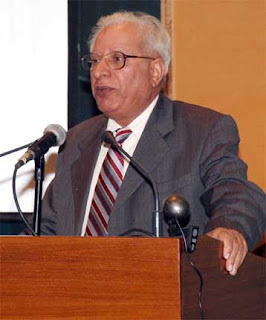
Prof Fateh Malik: New Rector of IIUI

The Nation
OUR STAFF REPORTER


ISLAMABAD - Prof. Fateh Muhammad Malik has assumed the charge of the Rector, International Islamic University Islamabad (IIUI) from Saturday. The President of Pakistan, as Chancellor of the International Islamic University, Islamabad appointed him Rector as per clause 12(1) of the IIUI Ordinance 1985. Earlier, Dr. Manzoor Ahmad, the outgoing Rector of the university relinquished the charge of the post of the Rector on February 21 on completion of his tenure.


Prof. Fateh Muhammad Malik is a leading scholar on Iqbaliyat, Urdu language and literature. He was also Chairman, National Language Authority. Professor Malik is the author of a number of books on Pakistan movement and literacy and cultural themes. He also served as Professor and Director of the Institute of Pakistan Studies at the Quaid-e-Azam University, Islamabad and as Iqbal Professor at Heidelberg University in Germany.

---------------------------------------------------

Introduction


Professor Fateh Muhammad Malik
(Sitara-e-Imtiaz)

Professor Malik is an acclaimed critic of Urdu literature. He is also a renowned scholar of Pakistan Studies and Islam. Currently he holds the prestigious position of the chairman of National Language Authority, Pakistan. His work has been published and recognized at national and international level. He was a visiting professor at Sir Allama Mohammad Iqbal chair in Heidelberg University, Germany for almost ten years. During his stay in Germany he taught, Iqbaliat, Islam and Pakistani culture, Urdu literature, and mysticism in Islam. He has authored several books, articles, and research papers in Urdu as well as in English. His latest work is SAADAT HASSAN MANTO: EK NAI TABIR.


Ex-Chairman, National Language Authority, Islamabad. December 2000.
Dy. Chairman Senate, Federal Urdu University, May 2006.
Visiting Professor, National Institute of Pakistan Studies, Quaid-i-Azam University, Islamabad.
Visiting Professor, Taxila Institute of Asian Civilisations, Quaid-i-Azam University, Islamabad


Qualifications: M.A (Urdu) - First Class First; Secured a Gold Medal
The University of Punjab, Lahore


Retired as Professor of Pakistan Studies / Director, National Institute of Pakistan Studies, Quaid-e-Azam University, and Islamabad.


Teaching Experience
a) 44 years of teaching and research experience at Postgraduate level; taught at Quaid-e-Azam University, Islamabad; Columbia University, New York; Heidelberg University; Humboldt University, Berlin and Saint Petersburg University, Russia.
b) Chairman, Department of Pakistan Studies, Quaid-e-Azam University, 1975 - 1978
c) Director, National Institute of Pakistan Studies, Quaid-e-Azam University, Islamabad Sept. 1983 - Feb. 1984, 1988-1996.


Research Experience
a) Visiting Professor (Iqbal Chair), Heidelberg, University, Germany. 1984 - 88 and 1992 - 96.
b) Senior Research Fellow, Southern Asian Institute, Columbia University, New York. January - August 1975.
c) Deputy Director, (Languages) Curriculum Research and Development of Education, Government of Punjab, Lahore 1972 -74.


Publications

1) Iqbaliyat: (On National Poet Allama Mohammad Iqbal)
Books
1. 2003, "Iqbal Ka Fikri Nizam, Sang-i-Meel, Lahore
2. 2002, "Iqbal Faramoshi, Sang-i-Meel, Lahore.
3. 1999, "Islam and the West, Islamabad.
4. 1985, "Iqbal: Fiker-o-Amal, Bazm-i-Iqbal, Club Road, Lahore.
5. 1989, "Iqbal Aur Afghanistan, NIPS Publication, Islamabad.


2) Literary Criticism
6. 2005, "Saadat Hassan Manto: Ek Nai Tabir, Lahore.
7. 1999, "Apni Aag ki Talash, Lahore.
8. 1992, "Ahmed Nadim Qasimi: Shair Aur Afsana Nigar, Sangi-i-Meel Publications, Lahore.
9. 1988, "Faiz: Shairi Aur Siyasat, Sangi-i-Meel Publications, Lahore, Literary Criticism
10. 1984, "Tahsin-o- Tardeed" Third collection of Essays, Maktaba-i-Asbat, Rawalpindi
11. 1979, "Andaz-i-Nazar" Second Collection of Essays in Literary Criticism. Maktaba-al-Tahreer, Lahore.
12. 1973, "Tassubat" Collection of Essays in Literary Criticism, Maktaba-i-Fanoon, Lahore


3) Pakistan Studies
13. 2004, "Khit-a-Khak Ya Arz-a-Pak", Islamabad.
14. 2002, "Gulamoon Ki Ghulami", Islamabad.
15. 2001, "Kashmir Kahani", Islamabad.
16. 2001, "Fikri Tangdasti", Islamabad.
17. 1989, "Punjabi Identity", Sang-i-Meel Publications, Lahore


Edited Books
1. 2004, "Muslim Political Thought, Islamabad.
2. 2001, "Tehrik-e-Azadi-e-Kashmir: Urdu Adab Key Aaiene Main", Lahore.
3. 1983, "Phalastin: Urdu Adab Mein", Maktaba-i- Hurmat, Rawalpindi.
4. 1982, "Muntakhib Afsanay 1981", Maktaba-i- Hurmat, Rawalpindi.
5. 1981, "Muntakhib Afsana 1980" Maktaba-i- Hurmat, Rawalpindi.
(c) Contributed Chapters to Books
1. 1999, "Islamic Values" in Asian Values, London.
2. 1998, "Iqbal Inspired Humor", in Humor in South Asian Literature, Osterheld, New Delhi.
3. 1982, "Iqbal ka Nazria-i-Saqafat", N.C.A., Islamabad.
4. 1979, "Iqbal Mahmoohi-i-Aalam" by Dr. Sale em Akhtar, Bazm-i-Iqbal, Lahore.
5. 1977, "Iqbal Bahaseyat Shair", by Rafi-ud-Din Hashmi, Majlis-e-Tarraqi-i-Adab, Lahore.
6. 1977, "Sahifa-i-Iqbal" by Ahmad Nadeem Qasmi, Gosha-i-Abad, Lahore.
7. 1981, "Maqalat" Pakistan Academy of Letters, Islamabad.
8. 1967, "Ahwal-o-Najadi-i-Ghalib" by Hayat Sayyal, Nazar Sons, Lahore.
9. 1966, "Nai Shairi" by Iftikhar Jalib, Lahore.
10. 1966, "Aab-i- Hayat ka T ehqiqi Metala" by Syed Sajjad, N ai Matbooat, Lahore.
11. 1964, "Behtreen Maqalat 1963: by Intizar Hussain, Maktaba-i- Jadid, Lahore.
12. 1963, "Behtreen Maqalat 1962: by Shohrat Bokhari, Maktaba-i- Jaadid, Lahore.


Research Articles
1. 2000, "The Image of Buddha in Iq bal, Jourual of South Asian Civilizations, Islamabad.
2. 1997, "Shah Hussain and the Malamitiyya Sufi Tradition", Pakistan Journal of History and Culture, Jan.
3. 1994, "Advent of Islam in Kashmir", Cultural Area Karakorum, Tabingen, Germany.
4. 1990, "The Role of Iqbal in Muslim Reawakening in Andre Wink (ed.) Islam Politics and Society in South Asia. Delhi.
5. 1987, "Iqbal, Naqshbandiya and Ideology of Muslim Nationalism, Iqbal Review, Lahore.
6. 1986, "Iqbal, Asbat-i-Nabuvat Aur Nazria-i-Pakistan, Naqoosh, Lahore.
7. 1977, "Iqbal's Concept of Pakistan, The Pakistan Times, Iqbal Centenary Supplement.
8. 1976, "Iqbal and Freedom Movement, The Pakistan Times, Iqbal Supplement.
9. 1975, "The Question of Nationalities: A Historical Perspective", Scrutiny, Islamabad.
10. 1976,"Tribalism Versus Modernism in Pakistan", Scrutiny Islamabad.
11. 1967, "Iqbal ki Ghazal, Funoon, Lahore.
12. 1964, "Iqbal kay Khilaf Rad-i-Amal Kayun? Funoon, Lahore.